If you're a small business owner trying to budget for a new website, you've probably noticed that web design cost can range from a few hundred pounds to several thousand. That gap is confusing, and it makes choosing the right option feel like guesswork.
This article gives you straight answers based on the UK market in 2026. You'll find realistic price ranges, what's usually included in a quote, what makes prices vary, and how to compare options without overspending.
By the end, you'll know what a fair price looks like for your specific situation, what questions to ask before signing anything, and how to avoid the most common pricing traps.
Web Design Cost in the UK: Quick Answer for Small Business Owners
In the UK, the cost of a small business website typically falls between £500 and £8,000, depending on pages, design quality, content, SEO and the level of support included. Most professional small business websites land somewhere in the £1,000–£3,000 range.
Here are realistic price brackets to use as a reference:
- Basic brochure website: £500–£1,000
- Professional small business website: £1,000–£3,000
- Custom website with advanced design and SEO: £3,000–£8,000+
- Ecommerce website: £2,000–£10,000+
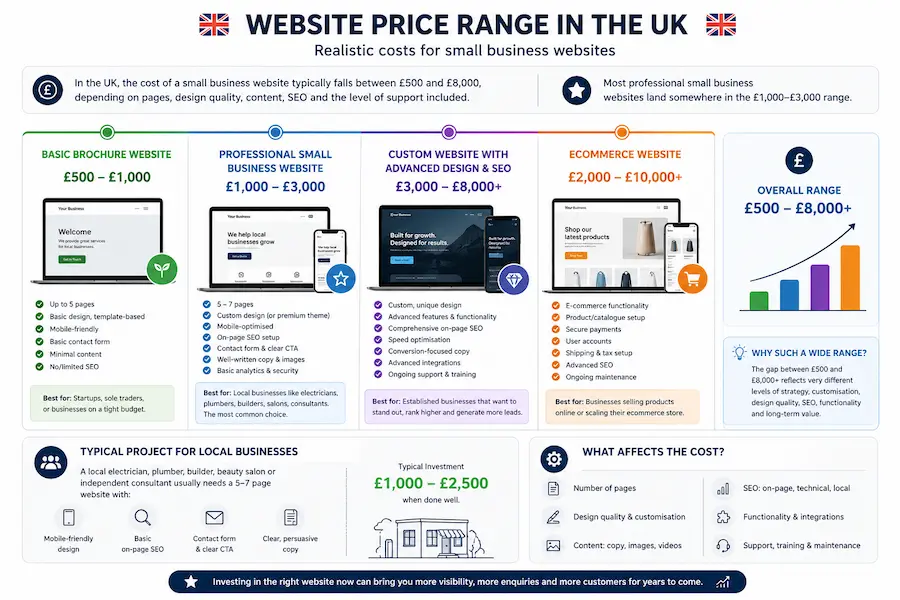
The wide gap between £500 and £5,000 isn't random. It reflects very different levels of strategy, customisation and long-term value, which we'll break down in the next sections.
Why Web Design Pricing Varies So Much
Two web design quotes for the same business can look completely different because they often describe different products. One might be a quick template setup; another might include strategy, custom design, copywriting and SEO foundations.
The main factors that drive website design pricing are:
- Level of customisation
- Experience of the designer or agency
- Quality of design and user experience
- SEO strategy included
- Whether content is written for you or supplied by you
- Technical features and integrations
- Number of revisions and ongoing support
- Project urgency
A low price doesn't always mean low quality, but it usually means a smaller scope. The honest question is: are you paying for a website, or for a complete solution that helps your business get found and convert visitors?
Template-Based Websites vs Custom Web Design
Template websites are faster and cheaper because the structure already exists. The designer plugs in your content, adjusts colours and images, and launches. It's a practical choice if you need an online presence quickly.
A custom website costs more because the design, structure and messaging are built around your business goals. You get a site that looks distinctive, communicates your value clearly and is structured to convert visitors.
A new sole trader can often start well with a clean template-based site. An established local business competing with five or six others in the same area usually benefits from something more strategic and harder to copy.
Freelancer vs Web Design Agency Pricing
Freelancers tend to be more affordable and offer direct, personal communication. You usually deal with one person from start to finish, which keeps things simple. Typical freelancer pricing for a small business site is around £700–£2,500.
Agencies cost more because you're paying for a team, structured processes, project management and often broader services like SEO, content and ongoing support. Expect agency pricing for a similar small business site to start around £2,000 and go up to £8,000+
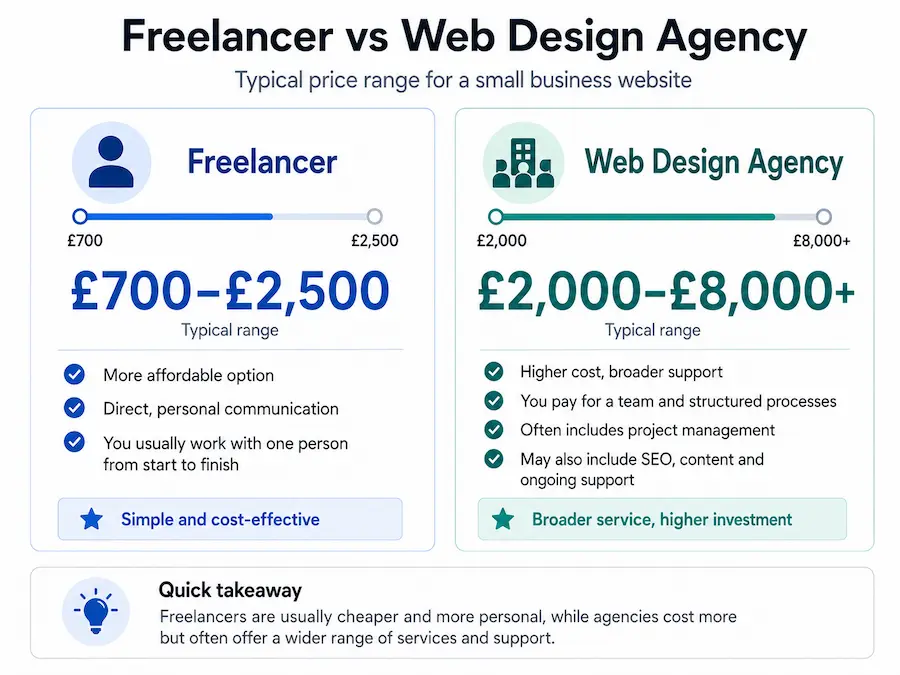
A skilled freelancer can absolutely deliver professional quality. The right choice depends on whether you value low cost and direct contact, or a fuller team and a more managed process.
Average Cost of Website Design for Small Business in the UK
The average cost of website design for small business in the UK realistically sits between £1,000 and £3,000 for a professional, well-built site. Below that, you're usually getting a basic brochure site. Above that, you're paying for advanced design, deeper SEO or custom features.
Here's a clearer view of what each tier typically includes:
Type of website
Typical price range
Best for
Starter
£500–£1,000
New sole traders, simple online presence
Standard small business
£1,000–£3,000
Local trades, salons, consultants
SEO-focused
£2,500–£5,000
Businesses competing for local search
Ecommerce
£2,000–£10,000+
Shops selling online
At Nestweb, we build professional SEO-optimised websites for UK small businesses starting from £700, designed to look credible and bring in real enquiries rather than just sit online.
Typical Small Business Website Price Ranges
Here's what you can realistically expect at different budgets:
- £700–£1,000: 1–3 pages, simple design, contact form, mobile-friendly. Good for getting online quickly.
- £1,000–£2,000: 5–8 pages, basic copywriting, on-page SEO, responsive design, analytics setup.
- £2,500–£4,000: Stronger SEO structure, dedicated service pages, conversion-focused design, tracking and basic local SEO.
- £4,000+: Custom design, advanced SEO, multiple service area pages, integrations and ongoing strategy.
Knowing where your budget sits helps you ask the right questions and avoid expecting £4,000 results from a £700 project.
Website Cost for Small Business by Industry
The website cost for small business also depends on the industry. Some businesses just need a clean online presence; others need portfolios, booking systems or strong local SEO to compete.
- Electrician or plumber: service pages, local SEO, click-to-call buttons, emergency contact CTA
- Builder: portfolio gallery, before/after photos, testimonials, project pages
- Beauty salon: booking system, treatment list, pricing, gallery
- Consultant or coach: authority-focused design, case studies, lead capture, clear positioning
A builder showcasing premium projects will naturally need a more visual, content-rich site than a local handyman who simply wants the phone to ring.
What Is Usually Included in a Professional Web Design Quote?
A serious web design quote should clearly list what's included. If it doesn't, that's already a warning sign. A complete quote usually covers:
- Discovery call and project planning
- Website structure and wireframes
- Design and development
- Mobile-responsive layout
- Basic on-page SEO
- Contact forms
- Analytics setup (Google Analytics, Search Console)
- Content upload
- Testing and launch support
Here's a simplified example of what a £1,200–£2,000 small business quote might look like: a 5-page website (homepage, about, services, service area page, contact), mobile-friendly design, on-page SEO, contact form, analytics setup and one round of revisions.
Design, Development and Mobile Optimisation
A professional website needs to work well on both desktop and mobile, load quickly and have a clear structure. Most of your visitors will arrive from a phone, so mobile experience matters more than desktop polish.
For a plumber or electrician, the homepage on a phone should make calling easy with a tap. For a beauty salon, booking should be obvious within seconds. Design isn't just about looking nice; it's about guiding visitors to take action.
Speed also affects both rankings and conversions. A slow site loses visitors before they even see your services.
SEO Basics That Should Be Included
Even a small budget should cover basic SEO. Without it, your beautiful new website might never appear in Google when local customers search for your services.
Basic SEO usually includes:
- Title tags and meta descriptions
- Heading structure (H1, H2, H3)
- Image alt text
- Clean URL structure
- Internal linking
- XML sitemap
- Google Search Console setup
If a quote doesn't mention SEO at all, ask. A site without SEO foundations can look great and still bring in zero traffic, which makes the whole investment harder to justify.
Copywriting and Content: Included or Extra?
Copywriting is one of the most confusing items in web design pricing. Some designers include basic text; others expect you to provide it. Professional copywriting raises the price but also improves clarity and conversion.
Generic phrases like "we offer high quality services at competitive prices" don't convince anyone. Specific text that addresses real customer concerns ("same-day callouts across Essex, no hidden fees") performs much better.
Always check the quote: who writes the content, how many words are included, and what happens if you can't supply text yourself.
Main Factors That Affect Web Design Cost
The main factors that affect web design cost are scope, complexity and ongoing strategy. The more pages, features and SEO you need, the higher the price.
Things that increase cost:
- More pages and content
- Custom design instead of templates
- Booking systems, payment gateways, CRM integrations
- Deeper SEO and local SEO setup
- Professional copywriting
- Custom photography and branding
- Ecommerce functionality
A 5-page site with simple features sits at the low end. A 20-page site with online booking, members' area and CRM integration sits at the high end.
Number of Pages and Website Structure
More pages mean more design, more content, more SEO work and more testing. A typical small business structure usually includes:
- Home
- About
- Services overview
- Individual service pages
- Service area pages (for local SEO)
- Contact
You don't always need many pages, but having dedicated service pages helps Google understand what you offer and helps customers find exactly what they need.
Custom Features and Integrations
Custom features push web design pricing up because each one needs setup, testing and sometimes ongoing maintenance. Common requests include online booking, payment systems, advanced quote forms, CRM connections, live chat and ecommerce.
A simple contact form is cheap and effective for most small businesses. A dynamic quote calculator or a multi-step booking system requires real development time, which is reflected in the price.
Start with what you actually need now. You can always add features later as the business grows.
Local SEO and Service Area Pages
If you serve specific towns or boroughs, local SEO can significantly affect both cost and results. A locally optimised site usually includes service area pages, local schema markup, location-based content and Google Business Profile alignment.
Pages like "Electrician in Bromley", "Builder in Croydon" or "Plumber in Chelmsford" help you appear when people search locally. They take more work to write and optimise, which adds to the cost, but the return on enquiries can be significant.
Cheap Website vs Professional Website: What Is the Real Difference?
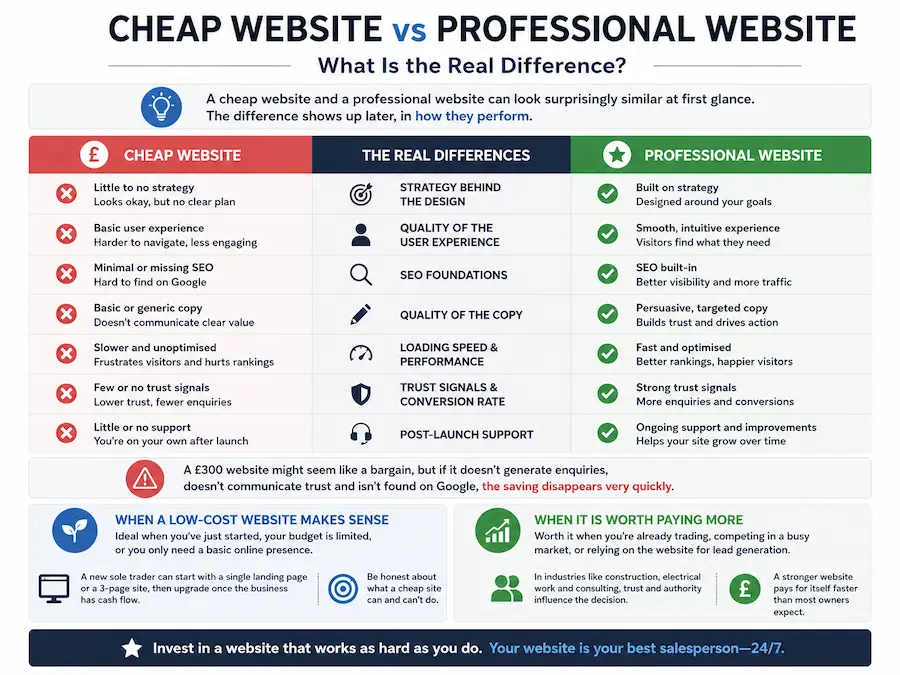
A cheap website and a professional website can look surprisingly similar at first glance. The difference shows up later, in how they perform.
The real differences usually involve:
- Strategy behind the design
- Quality of the user experience
- SEO foundations
- Quality of the copy
- Loading speed and performance
- Trust signals and conversion rate
- Post-launch support
A £300 website might seem like a bargain, but if it doesn't generate enquiries, doesn't communicate trust and isn't found on Google, the saving disappears very quickly.
When a Low-Cost Website Makes Sense
A low-cost website isn't always a bad choice. It can make sense if you've just started, your budget is genuinely limited, or you only need a basic online presence to confirm you exist.
A new sole trader testing the market can start with a single landing page or a 3-page site, then upgrade once the business has cash flow. The key is being honest about what a cheap site can and can't do for you.
When It Is Worth Paying More
Paying more is justified when you're already trading, competing in a busy market, or relying on the website for lead generation. In those cases, every visitor lost to a weak design is a real cost.
Industries like construction, electrical work and consulting often benefit from investing more, because trust and authority directly influence whether someone picks up the phone. A stronger website pays for itself faster than most owners expect.
How to Compare Web Design Quotes Before Choosing
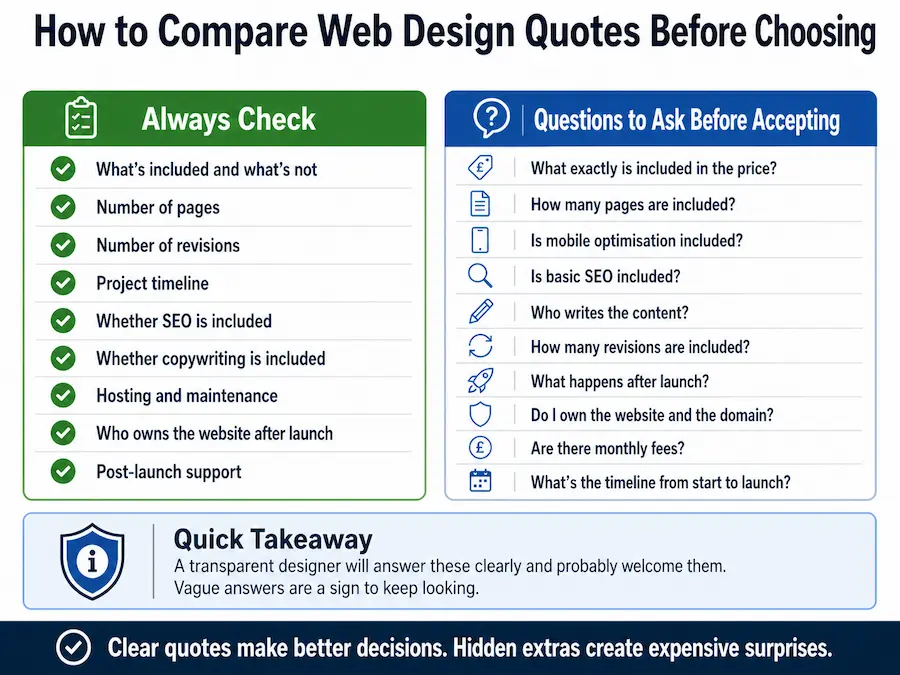
Before saying yes to any web design quote, compare the details, not just the totals. A £1,500 quote with everything included can be cheaper in real terms than a £900 quote with hidden extras.
Always check:
- Exactly what's included and what's not
- Number of pages
- Number of revisions
- Project timeline
- Whether SEO is included
- Whether copywriting is included
- Hosting and maintenance arrangements
- Who owns the website after launch
- Post-launch support
Questions to Ask Before Accepting a Web Design Quote
Use these questions to compare options like-for-like:
- What exactly is included in the price?
- How many pages are included?
- Is mobile optimisation included?
- Is basic SEO included?
- Who writes the content?
- How many revisions are included?
- What happens after launch?
- Do I own the website and the domain?
- Are there monthly fees?
- What's the timeline from start to launch?
A transparent designer will answer these clearly and probably welcome them. Vague answers are a sign to keep looking.
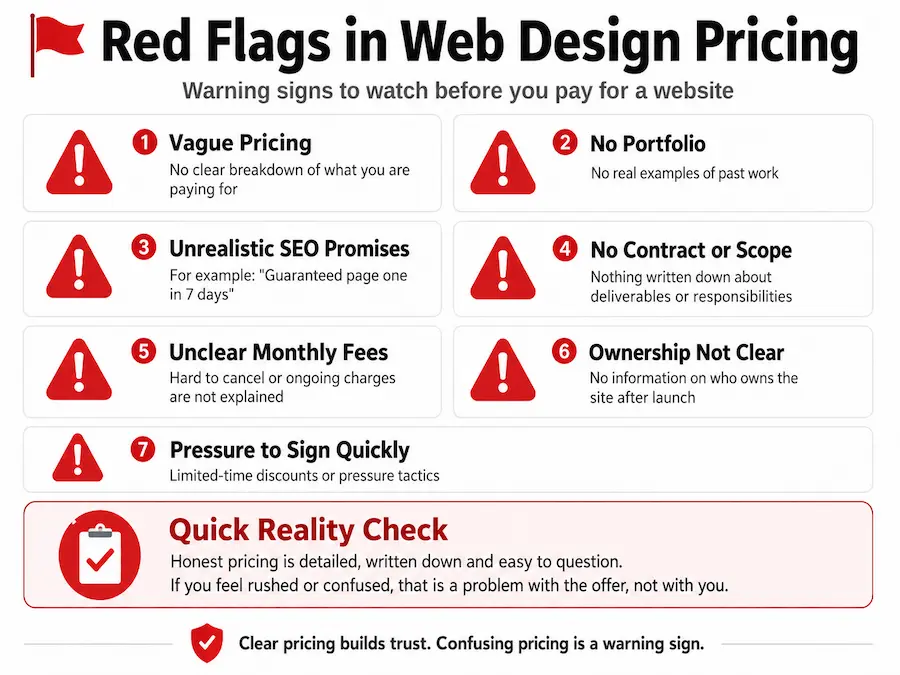
Red Flags in Web Design Pricing
Watch out for these signs:
- Vague pricing with no breakdown
- No portfolio of past work
- Unrealistic SEO promises like "guaranteed page one in 7 days"
- No written contract or scope of work
- Unclear monthly fees you can't cancel
- No information on who owns the site after launch
- Pressure to sign quickly with limited-time discounts
Honest pricing is detailed, written down and easy to question. If you feel rushed or confused, that's a problem with the offer, not with you.
One-Off Website Cost vs Ongoing Monthly Costs
The cost of website design for small business doesn't always end at launch. There are usually some ongoing costs to keep the site running and effective:
- Domain name: £10–£30 per year
- Hosting: £5–£30 per month for most small business sites
- Maintenance: £30–£150+ per month
- SEO services: £300–£1,000+ per month, depending on scope
- Paid ads management: variable, depending on budget
Not every site needs every service. But knowing what's optional and what's essential helps you plan the budget properly from day one.
Website Maintenance Costs
Maintenance covers updates, backups, security patches, small content changes and technical support. It's not glamorous, but it prevents issues like sites going down, getting hacked or breaking after a software update.
WordPress sites usually need more regular maintenance than custom sites managed by the original developer. If you don't want to handle it yourself, a maintenance plan removes the worry.
SEO and Marketing Costs After Launch
A new website is the foundation, not the finished job. Traffic and leads usually require ongoing SEO, content updates, Google Ads or local marketing.
A well-optimised site can start ranking on its own for less competitive searches. In tougher markets, ongoing work is what keeps you visible while competitors are also trying to climb the rankings.
How Much Should You Spend on a Small Business Website?
The right small business website price depends on your stage, your goals and what a customer is worth to you. A site that costs £1,500 but brings in clients worth £2,000 each is an investment, not an expense.
Useful questions to ask yourself:
- What's the average value of a customer for me?
- How competitive is my local market?
- How much do I rely on online enquiries?
- Do I need strong local SEO?
- How important is professional appearance to my customers?
Budget Recommendations by Business Stage
Rough guidance based on where your business is right now:
- New business with limited budget: £500–£1,000
- Growing local business: £1,000–£3,000
- Established business in a competitive market: £3,000+
- Ecommerce or advanced features: £3,000–£10,000+
At Nestweb, we focus specifically on UK small businesses, building professional SEO-ready sites from £700 that match these realistic budgets without cutting corners on what actually matters.
Is a Professional Website Worth the Cost?
A professional website is more than a digital brochure. Done well, it builds trust, explains your services clearly, generates enquiries, supports Google Ads campaigns and improves your local presence.
The return shows up in different ways: more phone calls, more form submissions, more confidence from new visitors, and a stronger brand impression. Even a small improvement in conversion rate can mean several extra customers a month from the same traffic.
Think About Cost Per Lead, Not Just Website Price
The smartest way to evaluate web design cost for small business is to think about cost per lead, not just upfront price. A £400 site that brings zero enquiries is more expensive than a £1,500 site that brings ten qualified leads.
If your average customer is worth £500–£2,000, even a handful of new clients pays back the website many times over. The price tag is only one part of the equation.
Final Thoughts: Choosing the Right Web Design Option for Your Business
The best web design cost isn't the lowest one. It's the price that matches your goals, your market and what you actually need the website to do.
Before requesting quotes, prepare a short list: pages you need, services to highlight, areas you cover, examples of websites you like and your rough budget. That clarity helps any designer give you a realistic, honest quote and helps you compare options properly.
Look for transparency, real experience, clear deliverables and a focus on results, not just looks. If you'd like a clear, no-pressure web design quote tailored to your business, goals and budget, Nestweb builds professional SEO-optimised websites for UK small businesses from £700. Get in touch and we'll walk you through a realistic plan based on what your business actually needs.

FAQ
How much does web design cost in the UK? Most small business websites in the UK cost between £500 and £8,000. A professional small business site typically falls in the £1,000–£3,000 range, while ecommerce and custom builds can reach £10,000 or more.
What is the average cost of website design for small business? The average cost of website design for small business in the UK realistically sits between £1,000 and £3,000. Below that, you're usually getting a basic brochure site; above that, you're paying for advanced design, deeper SEO or custom features.
Why do web design quotes vary so much? Quotes vary because designers offer different levels of service. Some include strategy, copywriting and SEO; others only build the site itself. Always compare what's included, not just the final price.
Is it better to hire a freelancer or a web design agency? Freelancers usually cost less and offer direct communication, with prices around £700–£2,500. Agencies cost more (£2,000–£8,000+) but offer a full team, structured processes and broader services. Both can deliver quality; the right choice depends on your needs and budget.
What should be included in a web design quote? A complete quote should cover discovery, design, development, mobile responsiveness, basic SEO, contact forms, analytics setup, content upload, testing and launch support. Revisions, copywriting and ongoing maintenance should also be clearly defined.
How much should a small business spend on a website? A new business with a tight budget can start at £500–£1,000. A growing local business should budget £1,000–£3,000 for a professional site. Established businesses in competitive markets often need £3,000+ to compete properly online.